Visibility with intent
Search strategies focused on reaching the audiences most likely to act.
Getting found is only part of the job, and being found now means Google, Bing and the AI assistants your audience asks. Our SEO, PPC and AI search visibility (AEO and GEO) services drive the right traffic and justify every dollar spent. Most services focus on volume; ours focus on outcomes: visibility that attracts the right audience, supports conversion and aligns with wider business goals over the long term.

Visibility in search results is easy to chase and expensive to maintain. Rankings rise, clicks increase, budgets get spent, but without a clear link to intent and performance it is hard to know what is actually working. Search itself has also changed: a growing share of your audience now asks ChatGPT, Perplexity, Gemini or Google's AI Mode and gets an answer instead of a list of links. If your organisation is not in that answer, you are invisible to them. As an SEO agency in Australia working mostly with not-for-profit, government and enterprise organisations, we run technical SEO, keyword and content strategy, paid search (SEM and PPC) management and AI search visibility (AEO and GEO) as one programme. When search is treated as a connected system, decisions become clearer, spend becomes easier to defend, and results are easier to improve over time.
Search strategies focused on reaching the audiences most likely to act.
Technical SEO, structured keyword research and paid campaigns tuned for efficiency, not vanity metrics.
Structured data, llms.txt and direct-answer content so ChatGPT, Perplexity and Google AI Mode can find, trust and cite you.
Clear reporting and data that sharpen targeting, spend, and decisions.
Branded search, AI citation checks and conversion data reported together, so you see what search actually delivers.
SEO and Google Ads built on the same intent map, so channels reinforce each other instead of bidding against pages that already rank.
Not-for-profit, government and enterprise audiences search differently. The approach is tailored to the sector, not a generic playbook.
SEO and dedicated PPC services integrated into your wider marketing and technology stack.
Strong search performance isn’t about being everywhere. It’s about showing up at the right moment, in front of the right person, with a message that matches intent. Keyword research assigns one primary intent per page so pages stop competing with each other, and content is planned around the questions your audience actually asks. When visibility is aligned this way, search becomes a growth lever rather than a reporting exercise.

Search performance isn’t about rankings or click volume in isolation. It’s about how efficiently spend turns into outcomes across landing pages, user experience and conversion rate. Paid search campaigns (Google Ads and PPC) are structured around the same intent map as the organic work, so the two channels reinforce each other rather than bidding against pages that already rank. Investment is then easier to defend because every campaign reports against an outcome, not a click.
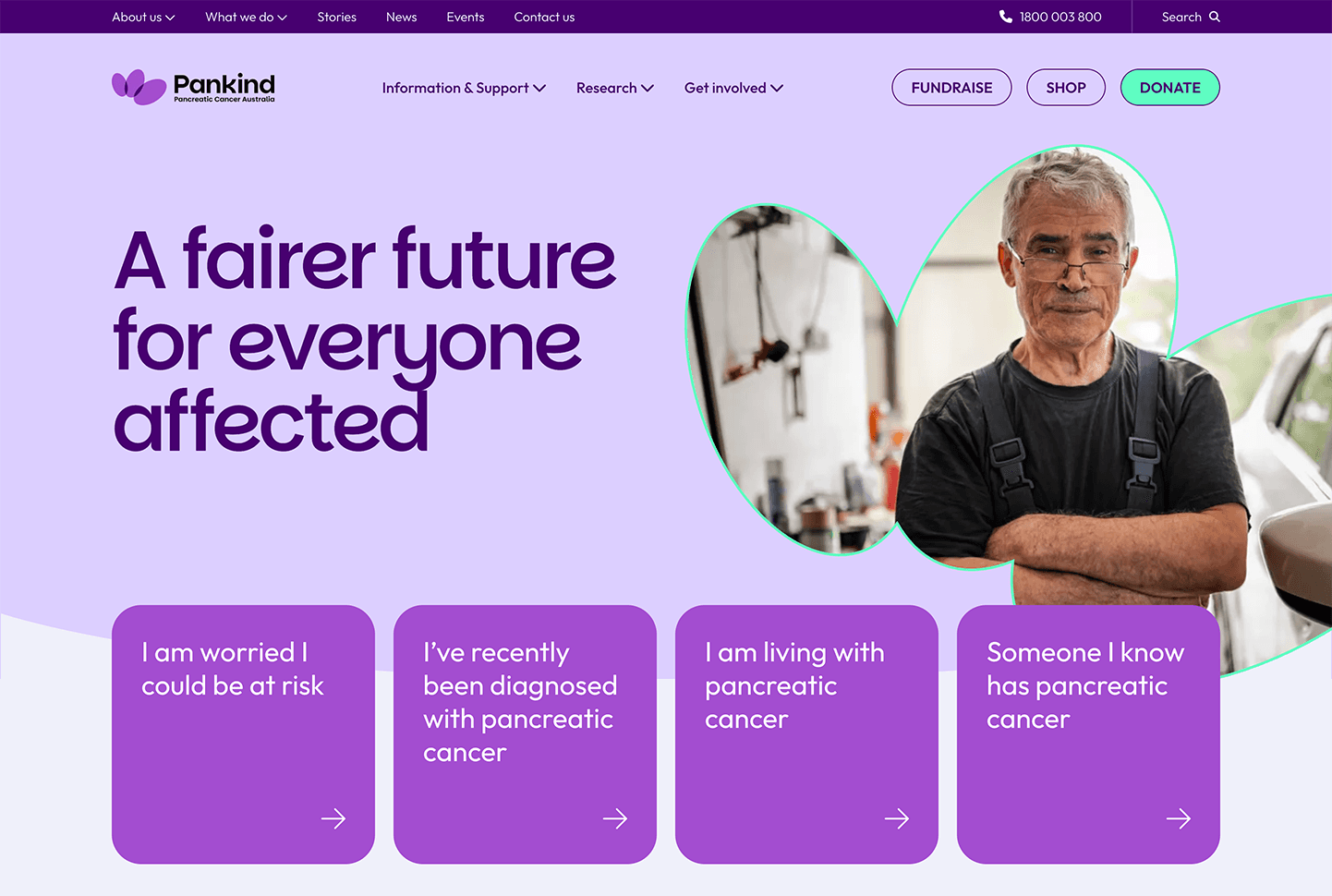
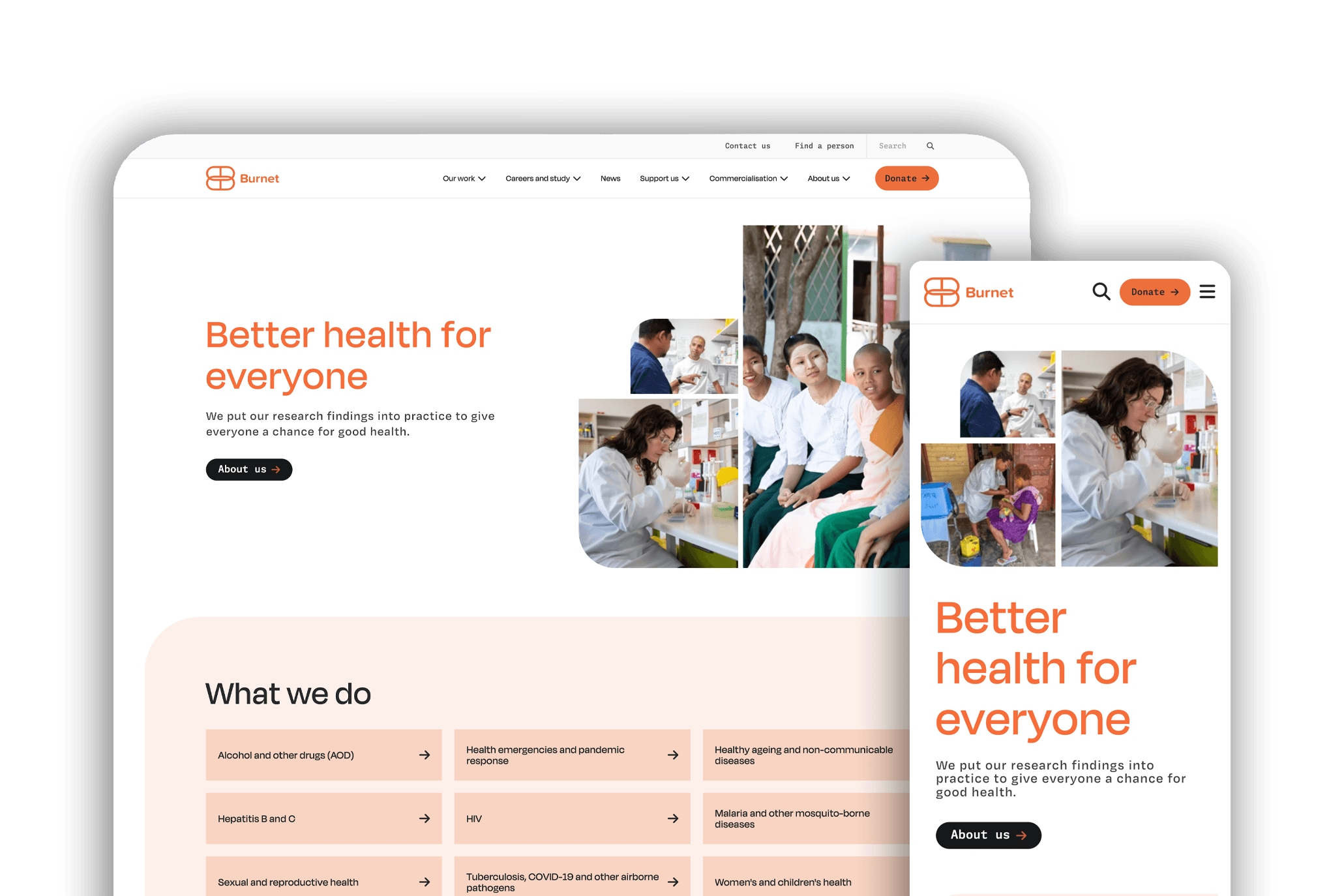
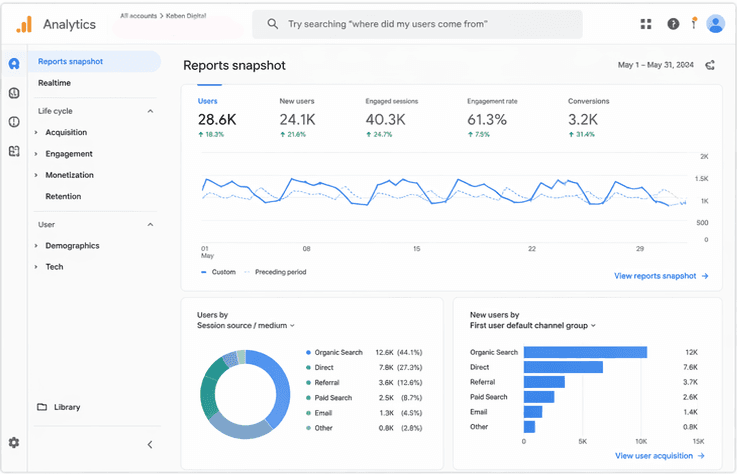
Data on its own doesn’t improve performance. What matters is how clearly it shows what to change, where to invest and what to stop doing. Reporting is built in GA4, Search Console and Semrush against the KPIs agreed at the start. On a 12-month SEO strategy for Burnet Institute that approach reduced technical issues by 94% and lifted organic page views across ten priority health themes by 182%.

A growing share of research now happens in ChatGPT, Claude, Perplexity, Gemini and Google's AI Mode, where an answer is generated rather than a list of links shown. Answer engine optimisation (AEO) and generative engine optimisation (GEO) make your content citable by those systems. In practice that means Organisation schema with sameAs identifiers so AI systems know who you are, an llms.txt file that points them at your best pages, a robots.txt that lets AI crawlers in, content that answers the question in the first sentence under each heading, and named authors behind it. We build this into the same programme as traditional SEO, so the work compounds across both.

There is no Search Console for ChatGPT, so we do not pretend there is. We set a branded search baseline in Google Search Console, run a quarterly prompt audit across ChatGPT, Claude, Perplexity, Google AI Mode and Bing Copilot, and record whether your pages are cited, which competitors are, and for which questions. Entity signals such as LinkedIn, Wikidata, ABN Lookup and industry directories are checked in the same review, along with AI referral traffic in GA4. Every finding lands in a prioritised task list with time estimates, so you know what to fix first and what it will cost.








Most organisations don’t need more ideas, they need direction. Our digital strategy services cut through complexity, align digital investment to real business objectives and give teams a clear path to long term, sustainable growth.
Read moreEnterprise website development services must navigate real operational pressure: governance, accessibility, scale, internal stakeholders, and constant change. When a website is treated as a static asset, teams pay for it later through rebuilds, workarounds, and lost momentum.
Read moreYour mission is complex enough. Not for profit website development should make your work easier, not more complicated. We design and build platforms that simplify operations, improve user experience, and help you connect with the right target audience, all without wasting time or budget.
Read moreSend us your domain. We will run a technical and keyword review, show you where you rank today across Google and AI search, and outline what a focused SEO and SEM programme would change first.
SEO is a cumulative process, so meaningful ranking and traffic movement typically takes several months rather than weeks, and continues to build over a longer engagement. Technical fixes can show impact faster; competitive keyword rankings take longer and depend on the difficulty of the terms being targeted.
SEO is organic, unpaid search visibility built through content, technical health and authority. SEM (search engine marketing) covers paid channels like Google Ads, where visibility is bought rather than earned. Most organisations benefit from both working together rather than choosing one over the other.
SEO earns rankings in traditional search results. AEO (answer engine optimisation) targets the AI-generated answers inside search engines such as Google AI Mode and Bing Copilot. GEO (generative engine optimisation) targets assistants such as ChatGPT, Claude and Perplexity that answer from their own retrieval. The same foundations serve all three: clean structured data, consistent entity signals and content that answers questions directly.
Yes. As AI-driven answer engines become a bigger part of how people find information, we work on AEO and GEO (answer engine and generative engine optimisation) alongside traditional SEO, including structured data, llms.txt and content written so AI systems can extract and cite it accurately.
There is no equivalent of Google Search Console for AI assistants, so measurement is directional rather than precise. We combine a branded search baseline in Search Console, a repeatable quarterly prompt audit that records whether your pages are cited for the questions that matter, and referral traffic from AI sources in GA4. We are upfront about those limits in every report.
On a 12-month SEO strategy for Burnet Institute, a global health research organisation, we reduced technical issues by 94% and lifted organic page views by 182% across ten priority health themes, with some individual themes up 615%. Engagement on those pages rose from 58% to 87% over the same period.
Yes, and sector context matters. SEO for a not-for-profit competing for donor attention looks different to SEO for a government service page competing for a specific search intent, so we tailor the approach to the sector rather than applying a generic playbook.