Architecture shapes scalability
Frontend and backend decisions that support performance, flexibility, and long-term maintainability.
Enterprise website development services must navigate real operational pressure: governance, accessibility, scale, internal stakeholders, and constant change. When a website is treated as a static asset, teams pay for it later through rebuilds, workarounds, and lost momentum.

As organisations grow, websites stop being a channel and start becoming infrastructure, and that’s where considered website development services can make the difference. Websites carry content, users, compliance requirements, internal workflows, and expectations from teams who rely on them daily. When that shift isn’t accounted for early, the site becomes harder to manage, harder to adapt, and more expensive to change than it should be. Our custom web development covers Umbraco CMS builds, headless sites with React and Next.js front ends, custom .NET applications, Azure hosting and WCAG accessibility, delivered for not-for-profit, government and enterprise organisations across Australia. If you’re reviewing your current platform or planning what comes next, this is where the right decisions make a lasting difference.
Frontend and backend decisions that support performance, flexibility, and long-term maintainability.
Content structures, permissions, and workflows designed to keep teams aligned as platforms grow.
Integrated platforms that reduce duplication and support operational visibility across teams.
Websites built to evolve cleanly as organisations, technology, and requirements change.
Websites rarely fail all at once. Complexity compounds slowly through tightly coupled systems, growing integrations, and frontend architectures that weren’t designed to evolve. Decisions around rendering, infrastructure, and platform boundaries determine how easily websites scale under real operational pressure.

Website usability isn’t only experienced by external users. Internal teams rely on CMS environments every day, and poorly structured content models create friction across publishing, approvals, permissions, and governance. Clear workflows and scalable content architecture keep platforms manageable as teams and content grow.
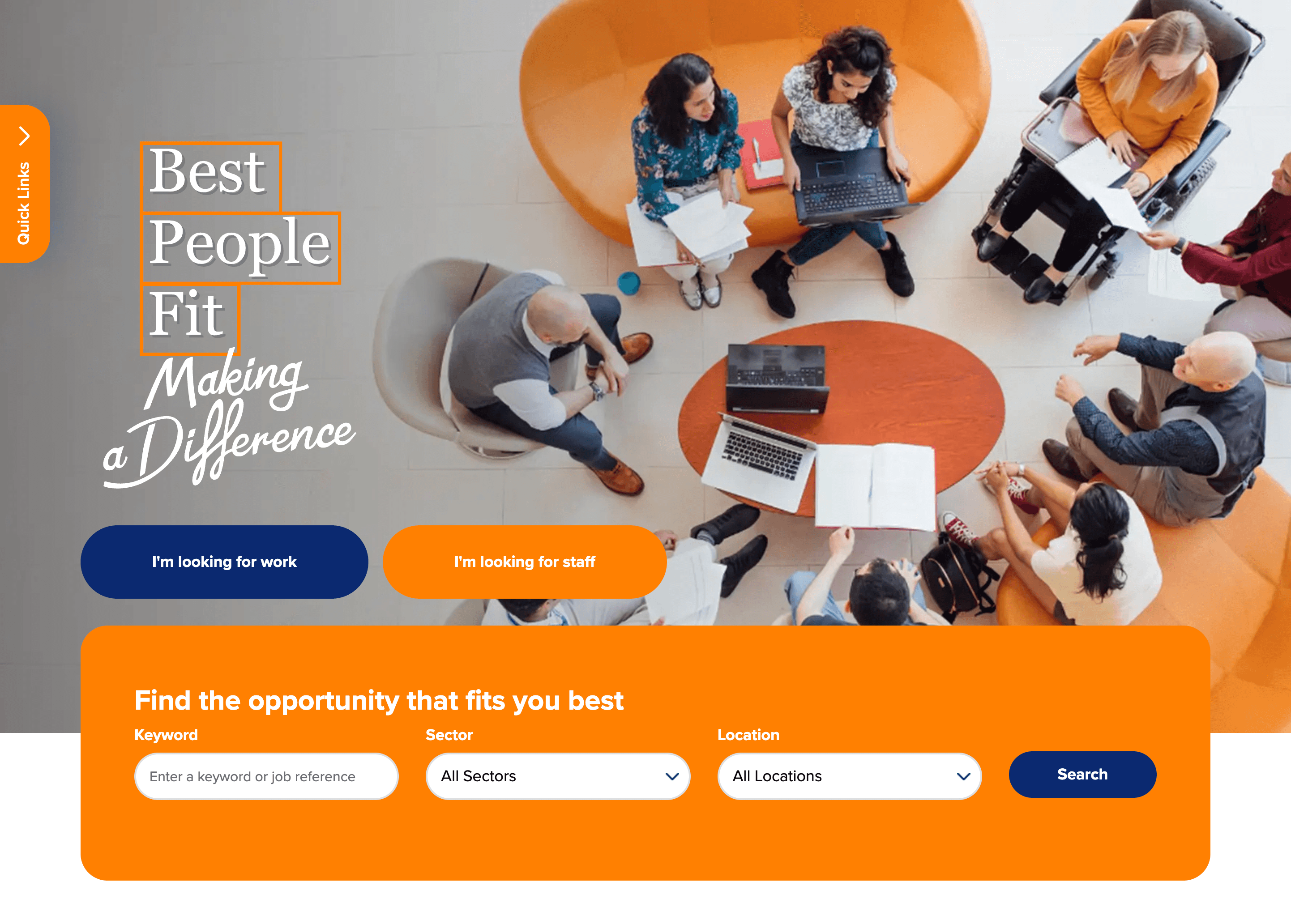

Our website is our public face. It’s often the first-place potential customers go to when they need to find out how we can help. Our customers will now benefit from an enhanced customer journey including personalisation.
Swati Dave, Managing Director, Export Finance Australia
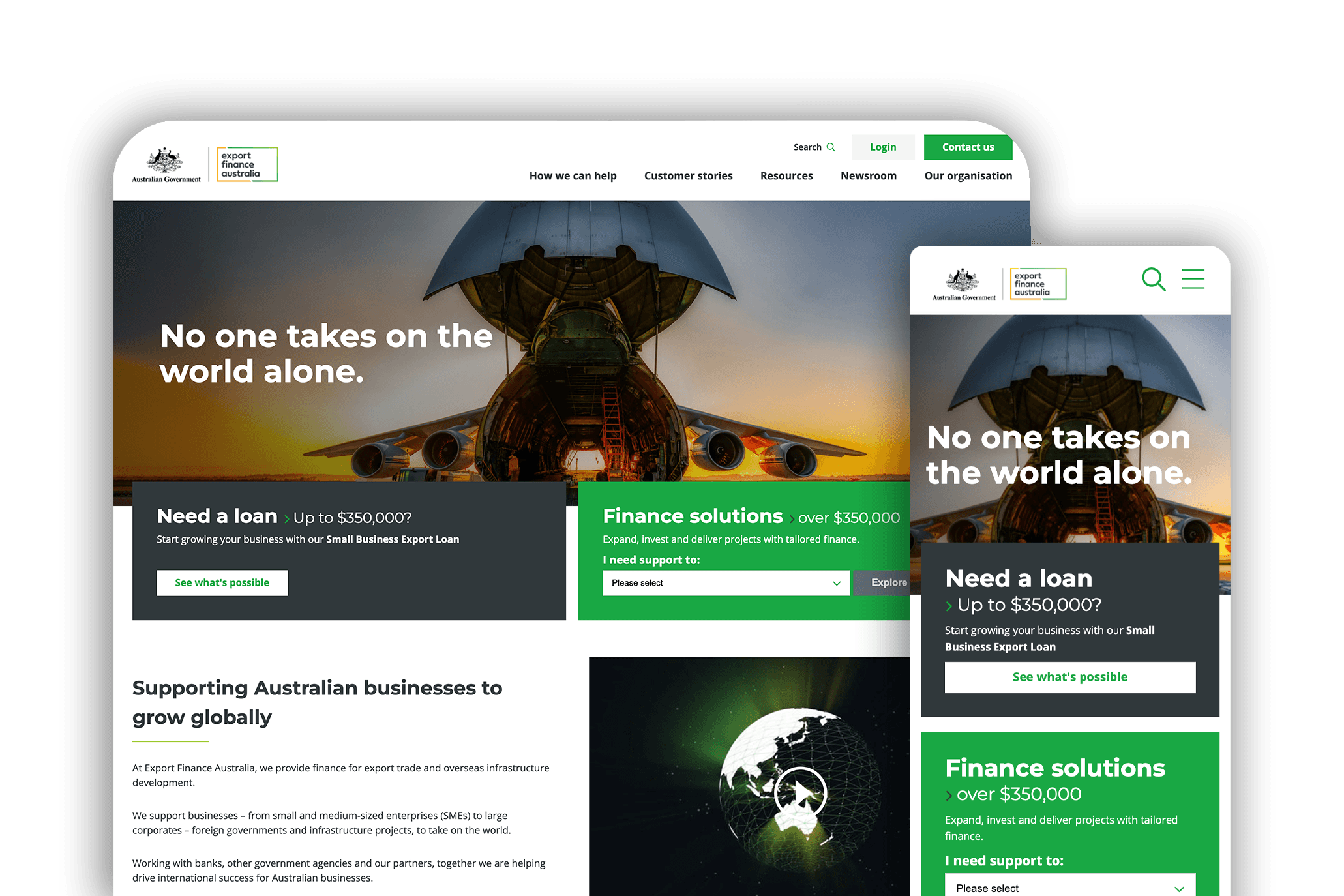
Crafted forExport Finance
Websites no longer operate independently from the rest of the organisation. APIs, CRMs, reporting platforms, search systems, and internal tools all shape how information moves and decisions get made. Integrations work best when they reduce duplication and support reliable data flow across systems.

Platforms that remain stable over time are usually the ones designed to absorb change cleanly. Clear architectural boundaries, maintainable codebases, and scalable infrastructure allow organisations to evolve websites incrementally without constant rebuilds or operational disruption.











Umbraco CMS is a flexible, open source platform designed for organisations dealing with complex content, integrations, and governance. As an Umbraco Platinum Partner, it's our go-to content management system when simpler platforms break down, supporting enterprise, government, and NFP platforms that need to scale, stay secure, and remain usable for everyday teams.
Read moreOur user interface design services earn their keep when interfaces remove hesitation. We design visual systems and visual design frameworks that establish clear hierarchy, guide attention, and make complex platforms easier to read, scan, and act on - especially in environments where users need to move quickly and confidently.
Read moreGovernment websites aren’t brand campaigns. They’re public infrastructure. Government website development must meet accessibility standards, security controls, procurement constraints, and public expectations all at once, without slowing delivery or compromising user experience. We design and build government websites that work in production, not just on paper.
Read moreKoben is the technical partner for design agencies taking on complex website projects. Your agency leads the creative and the client. We take on the full technical side, white label or co-branded.
Read moreShowing cards 1-1 of 4
Tell us what the site needs to do, who relies on it and what it connects to. We will come back with a clear view of the approach, timeline and cost.
We choose the platform based on what the project actually needs, rather than defaulting to one option. That can mean a CMS like Umbraco, a headless setup with a React front end, or a custom .NET application, depending on the content, integrations and team workflows involved. The goal is a build that fits your structure, not a one-size template.
Timeframes vary with scope, but a build for an organisation with real complexity (multiple content types, integrations, approval workflows) typically runs several months from discovery to launch. Straightforward sites move faster, and integration-heavy or multi-stakeholder projects take longer. We give a realistic timeline once we understand the scope, not before.
Yes. Most of our work is with organisations that have real structural complexity, layered approval processes, integrations with CRM or ERP systems, or accessibility and security obligations that a simple brochure site doesn't need to consider. That's the kind of build we're set up for.
A template gives you a fixed structure and limited flexibility, which is fine for a simple site with no unusual requirements. A custom build is designed around your actual content model, integrations and workflows, so it can scale, accommodate multiple approvers, and connect to other systems without fighting the platform. The trade-off is cost and time, so it's worth matching the approach to the actual complexity of what you're running.
Yes. We support sites we build, and sites we didn't build, through monitoring, maintenance, updates and technical guidance after launch. See our Support page for what that covers in more detail.