Proactive, not just reactive
Continuous monitoring, optimisation, and oversight designed to prevent problems before they escalate.
Digital support creates real value when platforms remain stable, secure and adaptable long after launch. We support Umbraco websites, apps and platforms as an embedded extension of your team: proactive monitoring, security patching, version upgrades and strategic guidance that keep platforms performing under real-world pressure, including the faster, automated attacks AI now makes possible.
Problems usually compound slowly through missed updates, performance degradation, disconnected ownership, security gaps, inconsistent governance, and platforms that become harder to evolve over time. The security side has changed fastest: AI tooling now lets attackers scan for unpatched software, build exploits for new vulnerabilities and run phishing and credential attacks at a scale that was not practical two years ago. An unsupported CMS version is found quickly. Our website maintenance and support services are delivered as a support retainer sized to your platform. For Umbraco, the platform most of our clients run, that means security advisories and patch releases applied within SLA, minor and major version upgrades planned around the LTS cycle, package and custom code audits, Azure hosting and performance management, backoffice access hardening, monitoring and tested backups, release management and ongoing strategic guidance. Response times are set by severity in an agreed SLA. Instead of reacting once issues escalate, we work alongside internal teams to keep websites, apps and platforms stable, secure and adaptable as organisational needs evolve.
Continuous monitoring, optimisation, and oversight designed to prevent problems before they escalate.
Patch releases, version upgrades, package audits and Azure hosting handled by a team that builds on Umbraco every day.
Security advisories tracked and patches applied inside agreed windows, because the gap between disclosure and exploit is now days, not weeks.
Direct access to experienced technical teams who understand complex digital environments.
Multi-factor backoffice access, web application firewalls, dependency scanning and alerting tuned for automated, high-volume attacks.
Clear SLAs, structured processes, and predictable response pathways when issues arise.
Every site tracked against Umbraco's LTS timeline, with the next upgrade scheduled well before end of life.
Ongoing support that keeps platforms secure, scalable, and aligned with evolving organisational needs.
Most digital issues don’t begin as critical incidents. They emerge gradually through outdated dependencies, inconsistent governance, missed updates, performance degradation, and systems that slowly become harder to maintain. Proactive support reduces that drift by keeping platforms monitored, maintained, and aligned before operational friction compounds.

Umbraco is the platform most of our clients run, so Umbraco support is where our retainers do the most work. Umbraco publishes security advisories and patch releases through the year; we track them and apply patches inside the SLA window. Major versions follow a long-term support (LTS) cycle, so we plan each upgrade (Umbraco 13 to 17, for example) before the current version reaches end of life, audit installed packages and custom code first, and run the upgrade through staging before it touches production. Day to day that also covers Azure hosting and scaling, backoffice user and permission reviews, performance tuning, tested backups and restores, and content editor support. Sites built by other agencies are welcome; we start with a short technical review so we know what we are taking on.

Escalation pathways, response expectations, governance, and operational responsibilities all shape how confidently organisations can manage digital platforms over time. Clear support structures reduce uncertainty, improve accountability, and help teams move faster when priorities shift or issues emerge.

Performance monitoring, security patching, release management, backups, infrastructure oversight, and dependency management all contribute to long term platform stability. Reliable support comes from disciplined operational processes that keep systems predictable as platforms evolve.

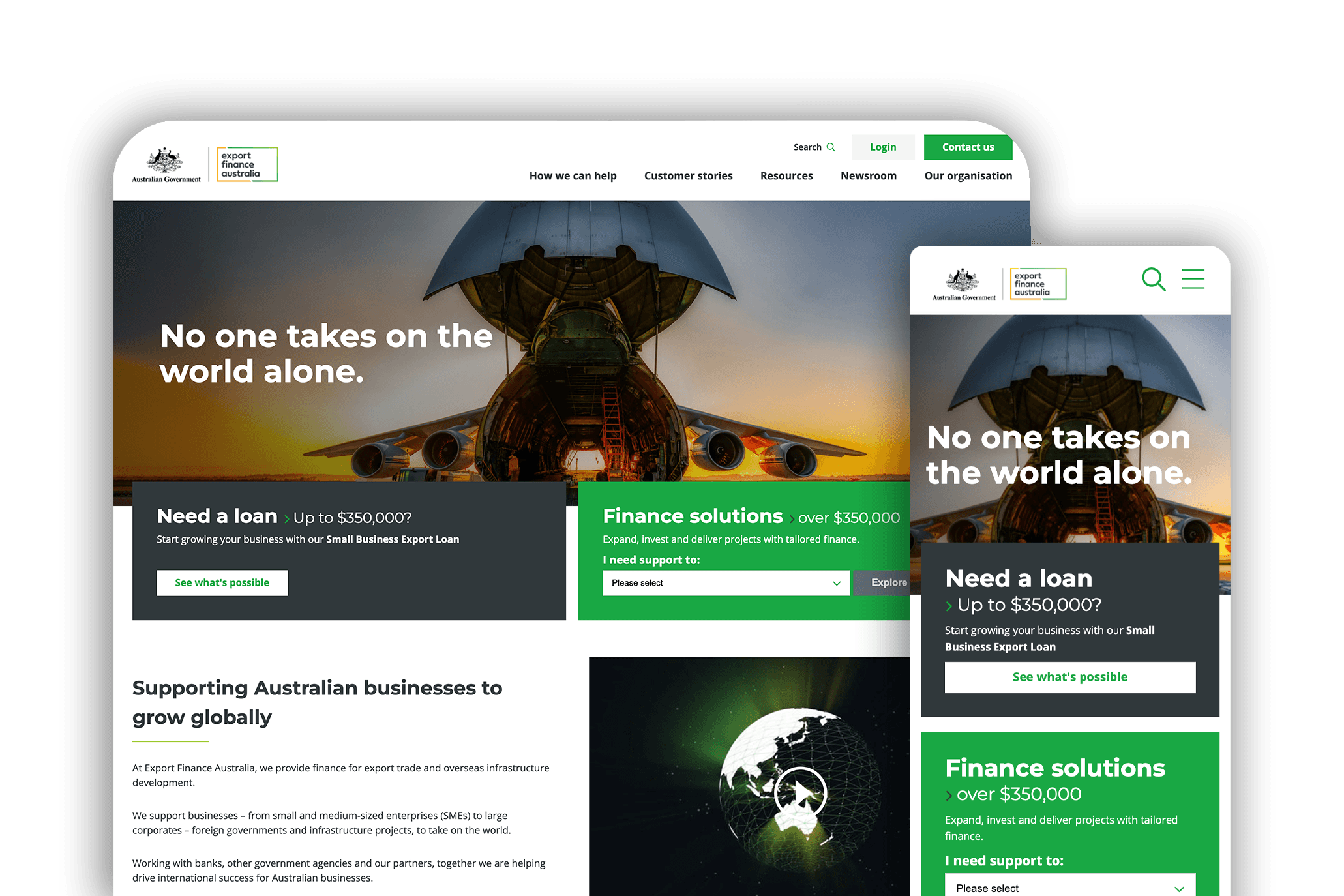
Attacks used to need skilled people and time. AI tooling has removed most of that cost. Attackers now scan the whole internet for a newly disclosed vulnerability within hours, generate working exploits from the patch notes, write convincing phishing in any language and run credential stuffing against admin logins at volume. The gap between a patch being released and it being exploited has shrunk from weeks to days. That changes what "supported" has to mean. An unpatched CMS, an exposed backoffice login without multi-factor authentication, an old package with a known CVE or a server nobody is watching will be found. Our retainers close those gaps as routine work: patches applied inside SLA, multi-factor authentication and IP restrictions on the backoffice, a web application firewall in front of the site, dependency scanning, log monitoring with alerting, and backups that are actually restore-tested. For Export Finance Australia this hardening was what got the platform through government penetration testing.

Strong support isn’t only about maintaining what already exists. It should create momentum through optimisation, strategic guidance, accessibility improvements, performance enhancements, and ongoing refinement. The best support relationships help platforms evolve deliberately instead of accumulating technical and operational debt.










Umbraco CMS is a flexible, open source platform designed for organisations dealing with complex content, integrations, and governance. As an Umbraco Platinum Partner, it's our go-to content management system when simpler platforms break down, supporting enterprise, government, and NFP platforms that need to scale, stay secure, and remain usable for everyday teams.
Read moreOur API integration services sit at the centre of how modern platforms operate. When they’re built with intent, data moves predictably between systems, teams stop compensating manually, and platforms hold up under real-world demand.
Read moreHealthcare websites sit at the intersection of patients, practitioners, and complex systems. Healthcare website development in this space demands clarity, resilience, and regulatory discipline. We design and build platforms that support real clinical workflows, protect sensitive information, and hold up under pressure.
Read moreTell us what you are running, who built it and when it was last upgraded. We will do a short technical and security review and recommend a support retainer with response times that match how much you rely on the platform.
It depends on the platform, the size of the site, and the level of response time and cover you need. Most support arrangements run as an ongoing retainer sized to that scope, rather than a fixed, one-size price, so we work it out once we understand what's involved.
Both models exist, and which one makes sense depends on how much you rely on the site and how quickly issues need attention. A retainer suits organisations that need predictable response times and regular proactive maintenance; ad hoc support can suit lower-risk sites with occasional needs.
Typically monitoring for issues, applying updates and security patches, performance checks, and technical guidance when something needs attention. What's included in a specific arrangement is set out in the SLA agreed at the start.
Yes. Umbraco is the platform most of our clients run and the one our team knows best. Umbraco support covers security advisories and patch releases, minor and major version upgrades, package and custom code audits, Azure hosting and performance, backoffice access control, and planning around Umbraco's long-term support (LTS) cycle so sites never sit on an unsupported version.
Once a version reaches end of life it stops receiving security patches, so every new vulnerability found afterwards stays open on your site. We track each client's version against Umbraco's support timeline and plan the upgrade to the next LTS release before that date, so the move is scheduled work rather than an emergency.
AI tools let attackers find unpatched software, write working exploits for newly disclosed vulnerabilities and run phishing and credential attacks at a scale and speed that was not practical before. The gap between a patch being released and it being exploited has shrunk from weeks to days. An unsupported CMS, an exposed admin login without multi-factor authentication or an unmonitored server is now found and targeted far more quickly, which is why a regular patching and monitoring cadence matters more than it did even two years ago.
Yes. We regularly take on support for platforms built by other teams. We'll usually do a short technical review first so we understand what we're taking on before committing to an SLA.
Response times are set out in the SLA and structured by severity, so a site-down issue gets a faster response than a minor content request. We agree those specifics with you before the support arrangement starts, not after something goes wrong.